Welcome at the Interface Culture program website.
Acting as creative artists and researchers, students learn how to advance the state of the art of current interface technologies and applications. Through interdisciplinary research and team work, they also develop new aspects of interface design including its cultural and social applications. The themes elaborated under the Master's programme in relation to interactive technologies include Interactive Environments, Interactive Art, Ubiquitous Computing, game design, VR and MR environments, Sound Art, Media Art, Web-Art, Software Art, HCI research and interaction design.

The Interface Culture program at the Linz University of Arts Department of Media was founded in 2004 by Christa Sommerer and Laurent Mignonneau. The program teaches students of human-machine interaction to develop innovative interfaces that harness new interface technologies at the confluence of art, research, application and design, and to investigate the cultural and social possibilities of implementing them.
The term "interface" is omnipresent nowadays. Basically, it describes an intersection or linkage between different computer systems that makes use of hardware components and software programs to enable the exchange and transmission of digital information via communications protocols.
However, an interface also describes the hook-up between human and machine, whereby the human qua user undertakes interaction as a means of operating and influencing the software and hardware components of a digital system. An interface thus enables human beings to communicate with digital technologies as well as to generate, receive and exchange data. Examples of interfaces in very widespread use are the mouse-keyboard interface and graphical user interfaces (i.e. desktop metaphors). In recent years, though, we have witnessed rapid developments in the direction of more intuitive and more seamless interface designs; the fields of research that have emerged include ubiquitous computing, intelligent environments, tangible user interfaces, auditory interfaces, VR-based and MR-based interaction, multi-modal interaction (camera-based interaction, voice-driven interaction, gesture-based interaction), robotic interfaces, natural interfaces and artistic and metaphoric interfaces.
Artists in the field of interactive art have been conducting research on human-machine interaction for a number of years now. By means of artistic, intuitive, conceptual, social and critical forms of interaction design, they have shown how digital processes can become essential elements of the artistic process.
Ars Electronica and in particular the Prix Ars Electronica's Interactive Art category launched in 1991 has had a powerful impact on this dialog and played an active role in promoting ongoing development in this field of research.
The Interface Cultures program is based upon this know-how. It is an artistic-scientific course of study to give budding media artists and media theoreticians solid training in creative and innovative interface design. Artistic design in these areas includes interactive art, netart, software art, robotic art, soundart, noiseart, games & storytelling and mobile art, as well as new hybrid fields like genetic art, bioart, spaceart and nanoart.
It is precisely this combination of technical know-how, interdisciplinary research and a creative artistic-scientific approach to a task that makes it possible to develop new, creative interfaces that engender progressive and innovative artistic-creative applications for media art, media design, media research and communication.
forum Dialog # 52
Mittwoch, 25. März 2026, 16.00 Uhr KinderKunstLabor für zeitgenössische Kunst, Schulring 24, St. Pölten
Wir sind zu Gast bei Eva Leutgeb und Ina Hsu
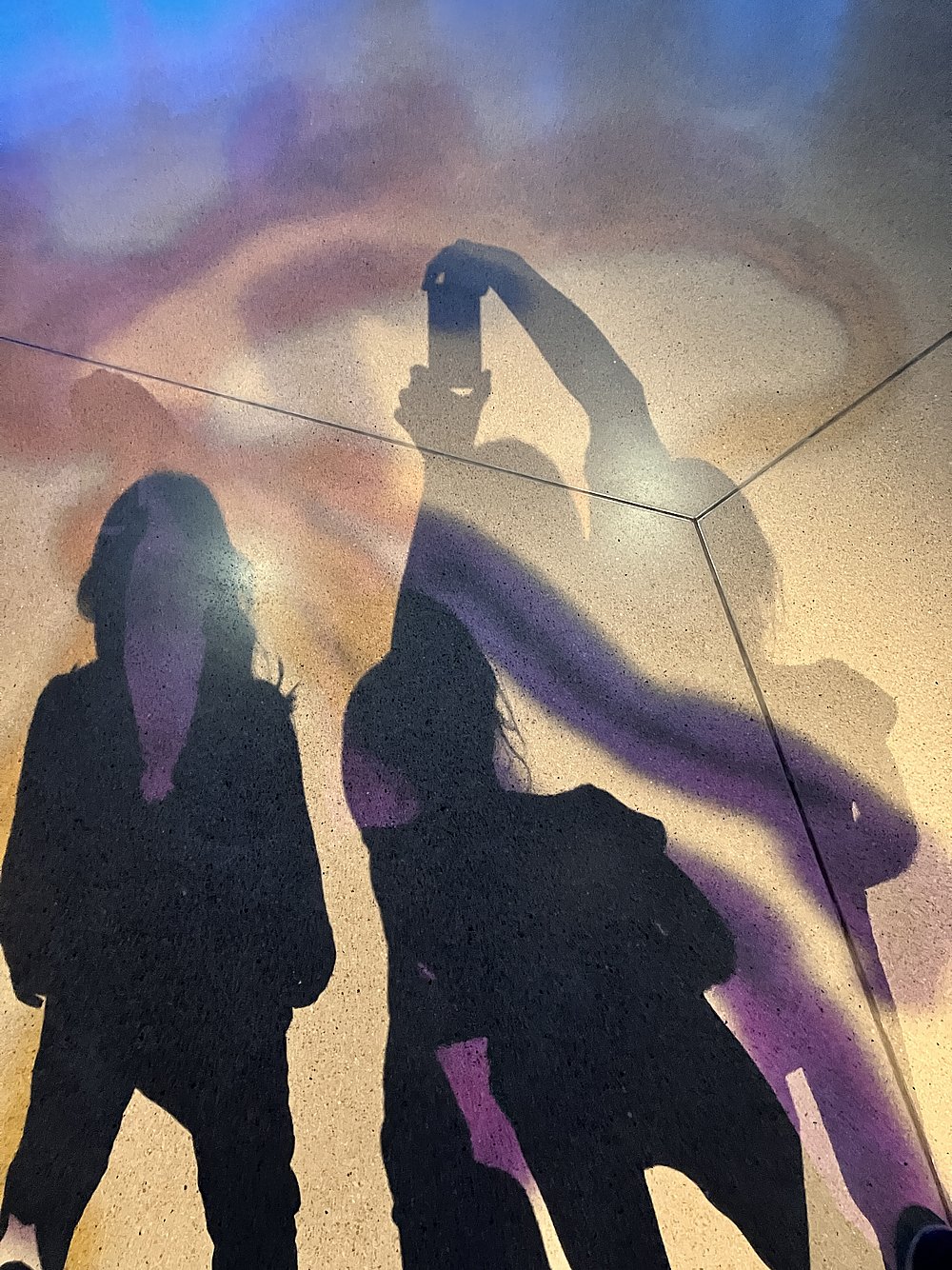
Das KinderKunstLabor ist ein Ausstellungshaus für zeitgenössische Kunst mit Fokus auf Kinder bis 14 Jahre. Seit der Eröffnung 2024 bietet es einen interdisziplinären, experimentellen Raum, in dem Kinder Kunst nicht nur erleben, sondern aktiv mitgestalten.
Als lernende Institution verbindet das Haus internationale Ausstellungen mit Workshops, Forschung und innovativer Kunstvermittlung aus der Perspektive junger Menschen.
Eva Leutgeb, studierte bildende Kunst-Bildhauerei/Transmedialer Raum an der Kunstuniversität Linz und absolvierte Ausbildungen zur Waldpädagogin und Kulturvermittlerin. Seit 2009 ist sie als bildende Künstlerin und Kulturvermittlerin unter dem Namen Evi Leuchtgelb selbständig tätig. Sie entwickelt interdisziplinäre und interaktive Kunstprojekte und nimmt damit an internationalen Residencyprogrammen und Ausstellungen teil.
Seit über zwanzig Jahren erarbeitet die Künstlerin für und mit Kindern und Jugendlichen, vor allem aus dem ländlichen Raum, Workshopangebote und Veranstaltungsformate. Seit 2024 ist sie Leiterin der Kunstvermittlung und Outreach im KinderKunstLabor für zeitgenössische Kunst St.Pölten.
Ina (Shian-Fong) Hsu studierte unter anderem Malerei und Grafik an der Kunstuniversität Linz. Die Arbeiten der Künstlerin und Kunstvermittlerin mit internationaler Ausstellungstätigkeit bewegen sich zwischen Malerei, Zeichnung und Vermittlung. Im KinderKunstLabor ist sie seit 2025 als Kunstvermittlerin tätig.
Nach einem Rundgang durchs Haus und dem Besuch der aktuellen Ausstellung Geschwister – super & nervig, berichten die beiden Künstlerinnen von ihrem Werdegang und ihrer Tätigkeit im KinderKunstLabor.
Anmeldung erbeten: https://forms.office.com/e/weVrbUygKz
_______________________________________________________________
Das forum übernimmt die Eintritte der Teilnehmer*innen
Personen mit folgenden Ausweisen können gratis ins Museum:
Hunger auf Kunst und Kultur, IAA – International Association of Art, ICOM, Mitgliedskarte - Verband der österreichischen Kulturvermittler:innen, Einmaliger kostenloser Eintritt mit der NÖ Card
Personen, die von Linz aus öffentlich reisen, empfehlen wir folgenden Zug:
Abfahrt Linz HBF: 14.36 Uhr (Westbahn)
Ankunft St. Pölten HBF: 15.24 Uhr.
Das KinderKunstLabor ist in etwa 10 min Fußweg vom Bahnhof entfernt.
Die Zugtickets bitten wir selber zu organisieren
©KinderKunstLabor_Eva Leutgeb
