Welcome at the Interface Culture program website.
Acting as creative artists and researchers, students learn how to advance the state of the art of current interface technologies and applications. Through interdisciplinary research and team work, they also develop new aspects of interface design including its cultural and social applications. The themes elaborated under the Master's programme in relation to interactive technologies include Interactive Environments, Interactive Art, Ubiquitous Computing, game design, VR and MR environments, Sound Art, Media Art, Web-Art, Software Art, HCI research and interaction design.

The Interface Culture program at the Linz University of Arts Department of Media was founded in 2004 by Christa Sommerer and Laurent Mignonneau. The program teaches students of human-machine interaction to develop innovative interfaces that harness new interface technologies at the confluence of art, research, application and design, and to investigate the cultural and social possibilities of implementing them.
The term "interface" is omnipresent nowadays. Basically, it describes an intersection or linkage between different computer systems that makes use of hardware components and software programs to enable the exchange and transmission of digital information via communications protocols.
However, an interface also describes the hook-up between human and machine, whereby the human qua user undertakes interaction as a means of operating and influencing the software and hardware components of a digital system. An interface thus enables human beings to communicate with digital technologies as well as to generate, receive and exchange data. Examples of interfaces in very widespread use are the mouse-keyboard interface and graphical user interfaces (i.e. desktop metaphors). In recent years, though, we have witnessed rapid developments in the direction of more intuitive and more seamless interface designs; the fields of research that have emerged include ubiquitous computing, intelligent environments, tangible user interfaces, auditory interfaces, VR-based and MR-based interaction, multi-modal interaction (camera-based interaction, voice-driven interaction, gesture-based interaction), robotic interfaces, natural interfaces and artistic and metaphoric interfaces.
Artists in the field of interactive art have been conducting research on human-machine interaction for a number of years now. By means of artistic, intuitive, conceptual, social and critical forms of interaction design, they have shown how digital processes can become essential elements of the artistic process.
Ars Electronica and in particular the Prix Ars Electronica's Interactive Art category launched in 1991 has had a powerful impact on this dialog and played an active role in promoting ongoing development in this field of research.
The Interface Cultures program is based upon this know-how. It is an artistic-scientific course of study to give budding media artists and media theoreticians solid training in creative and innovative interface design. Artistic design in these areas includes interactive art, netart, software art, robotic art, soundart, noiseart, games & storytelling and mobile art, as well as new hybrid fields like genetic art, bioart, spaceart and nanoart.
It is precisely this combination of technical know-how, interdisciplinary research and a creative artistic-scientific approach to a task that makes it possible to develop new, creative interfaces that engender progressive and innovative artistic-creative applications for media art, media design, media research and communication.
Nachhaltige Mode als Safe Space
6. März bis 13. September 2026 Im OÖ Kulturquartier, OK Platz 1, 4020 Linz
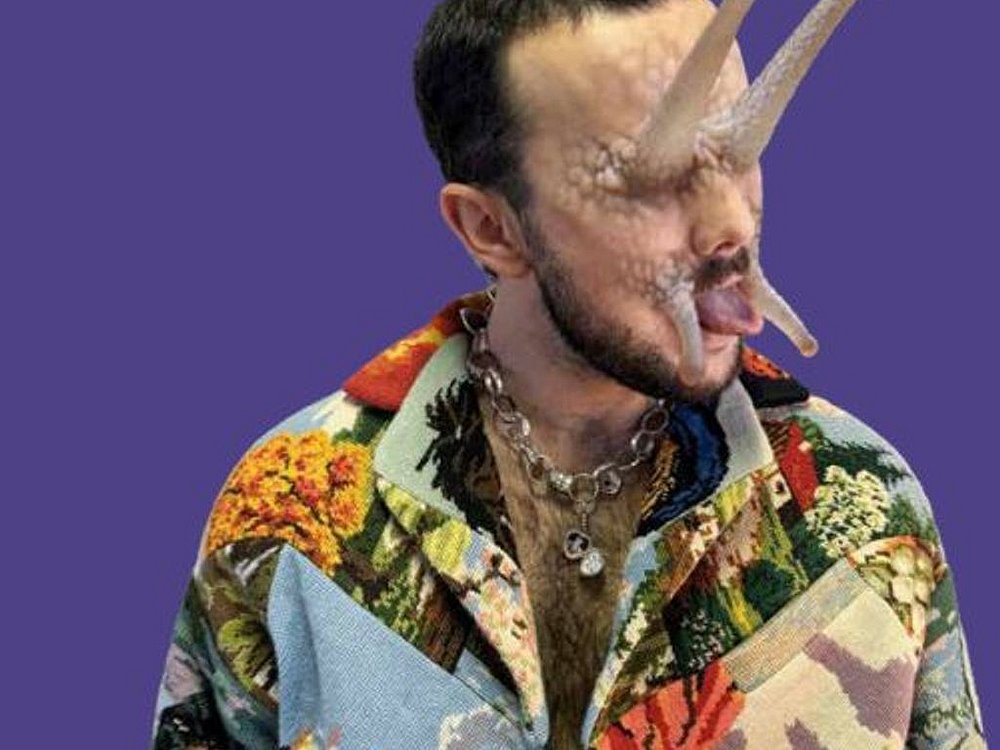
Peter Fellner, Master-Student Fashion & Technology, stellt im OK Linz aus. Die Eröffnung findet am Freitag, 6. März 2026 um 18.00 Uhr statt.
In GLUMPERT verknüpft der österreichische Designer Peter Fellner nachhaltige Materialstrategien mit einer bewussten, queeren Symbolik. Aus gebrauchten Alltagsgegenständen wie Stickbildern, Häkeldeckchen, Tüchern und Regenschirmen schafft er Kleidungsstücke, deren Spuren sichtbar bleiben und eine erzählerische, identitätsstiftende Narration tragen. Schon im Materialfindungs- und Schnittprozess wird eine Grenze zwischen Funktion und Bedeutung verschoben: Gewöhnliche Objekte erhalten neue Wertschätzung, nehmen eine neue Form an und erschaffen neue Wirklichkeiten.
Die Symbolik der Schnecke durchzieht die Kollektion als Sinnbild von Fluidität – ein queeres Vorbild aus der Natur. Fellner nutzt dieses Symbol auch, um einen Safe Space zu verorten und zugleich den Modemarkt zu entschleunigen: Eine Zero-Waste Schnitttechnik entsteht, die Identität performativ sichtbar macht und den Blick auf heteronormative Dresscodes verschiebt. Kleidung wird hier nicht nur getragen, sondern gezeigt, diskutiert und verhandelt. Die Nachhaltigkeitsstrategie „repurpose“ (kann mit „Umnutzung“ übersetzt werden) fokussiert gebrauchte Materialien und steht somit für ökologische Verantwortung und eine politische Botschaft: Gegenstände, Menschen und Lebewesen, die als „ungeachtet“ gelten, finden neue Wertschätzung.
Fellners Arbeit bewegt sich an der Schnittstelle von Design, Körperpolitik und queerer Ästhetik: ein Hybrid aus Kunst und Mode, die Gegenwartskritik sichtbar macht und Raum für Vielfalt eröffnet.
Kuratorin: Sandra Kratochwill
Diese Ausstellung kann kostenfrei besucht werden.
OÖ Landes-Kultur GmbH, OK Linz