Welcome at the Interface Culture program website.
Acting as creative artists and researchers, students learn how to advance the state of the art of current interface technologies and applications. Through interdisciplinary research and team work, they also develop new aspects of interface design including its cultural and social applications. The themes elaborated under the Master's programme in relation to interactive technologies include Interactive Environments, Interactive Art, Ubiquitous Computing, game design, VR and MR environments, Sound Art, Media Art, Web-Art, Software Art, HCI research and interaction design.

The Interface Culture program at the Linz University of Arts Department of Media was founded in 2004 by Christa Sommerer and Laurent Mignonneau. The program teaches students of human-machine interaction to develop innovative interfaces that harness new interface technologies at the confluence of art, research, application and design, and to investigate the cultural and social possibilities of implementing them.
The term "interface" is omnipresent nowadays. Basically, it describes an intersection or linkage between different computer systems that makes use of hardware components and software programs to enable the exchange and transmission of digital information via communications protocols.
However, an interface also describes the hook-up between human and machine, whereby the human qua user undertakes interaction as a means of operating and influencing the software and hardware components of a digital system. An interface thus enables human beings to communicate with digital technologies as well as to generate, receive and exchange data. Examples of interfaces in very widespread use are the mouse-keyboard interface and graphical user interfaces (i.e. desktop metaphors). In recent years, though, we have witnessed rapid developments in the direction of more intuitive and more seamless interface designs; the fields of research that have emerged include ubiquitous computing, intelligent environments, tangible user interfaces, auditory interfaces, VR-based and MR-based interaction, multi-modal interaction (camera-based interaction, voice-driven interaction, gesture-based interaction), robotic interfaces, natural interfaces and artistic and metaphoric interfaces.
Artists in the field of interactive art have been conducting research on human-machine interaction for a number of years now. By means of artistic, intuitive, conceptual, social and critical forms of interaction design, they have shown how digital processes can become essential elements of the artistic process.
Ars Electronica and in particular the Prix Ars Electronica's Interactive Art category launched in 1991 has had a powerful impact on this dialog and played an active role in promoting ongoing development in this field of research.
The Interface Cultures program is based upon this know-how. It is an artistic-scientific course of study to give budding media artists and media theoreticians solid training in creative and innovative interface design. Artistic design in these areas includes interactive art, netart, software art, robotic art, soundart, noiseart, games & storytelling and mobile art, as well as new hybrid fields like genetic art, bioart, spaceart and nanoart.
It is precisely this combination of technical know-how, interdisciplinary research and a creative artistic-scientific approach to a task that makes it possible to develop new, creative interfaces that engender progressive and innovative artistic-creative applications for media art, media design, media research and communication.
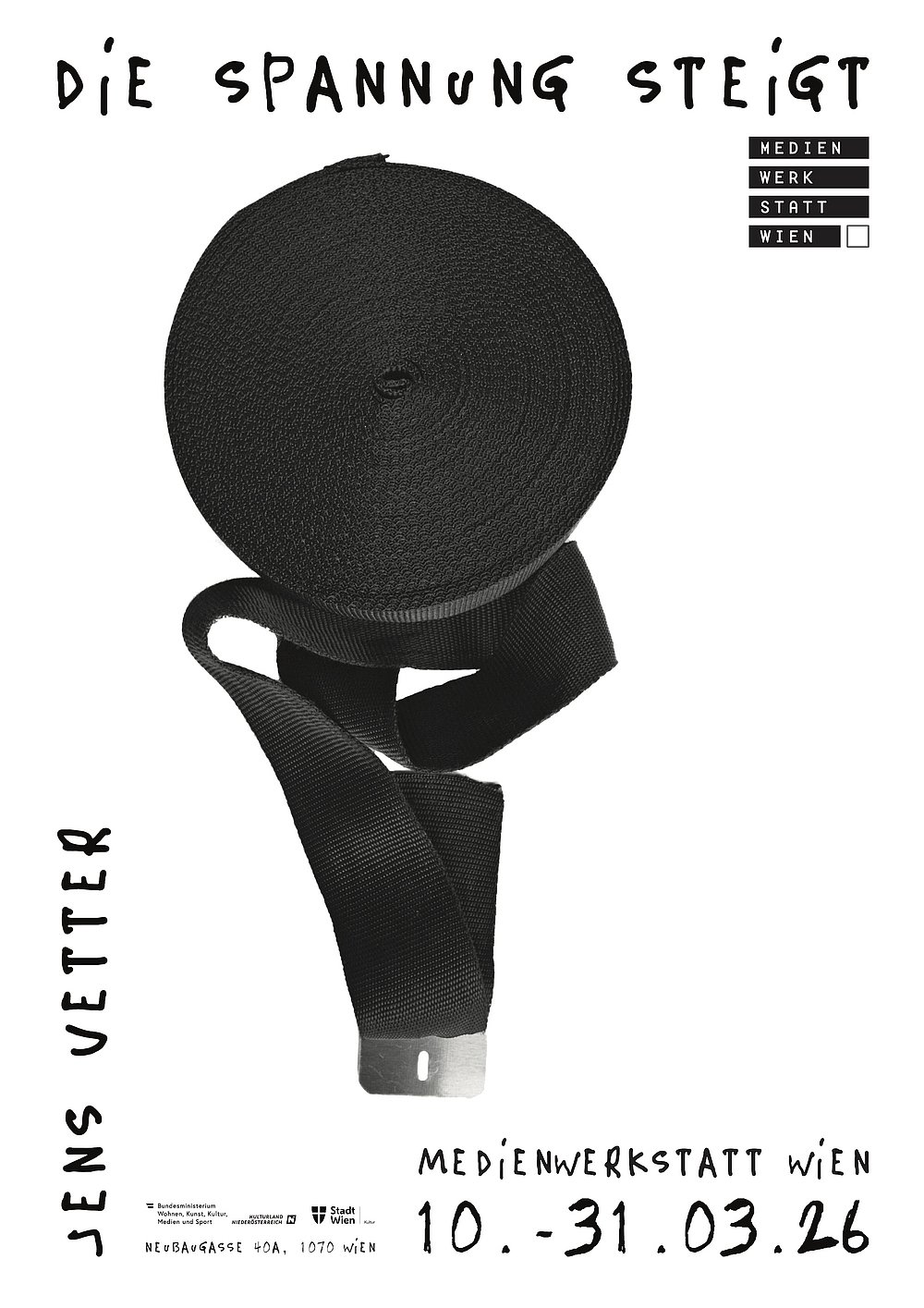
Die Spannung steigt
11. März bis 31. März 2026 Medienwerkstatt Wien, Neubaugasse 40a, 1070 Wien
Jens Vetter, Künstler im Tangible Music Lab, stellt aus.
Spannung ist ein resonierendes System. Sie existiert zwischen zwei Polen - zwischen Zug und Widerstand, Kontrolle und Loslassen. Ihre Ausprägungen sind vielschichtig, sie ist sowohl physikalische Kraft, als auch innere Anspannung oder narrativer Widerspruch. Als Musikinstrument begriffen ist Spannung weniger ein Werkzeug als ein Beziehungsraum. Sie erzeugt keine Harmonie im klassischen Sinn, sondern ein Geflecht aus Einflüssen - ein kollektives Klangfeld, das sich ständig neu ordnet. In der Ausstellung „Die Spannung steigt“ untersucht Jens Vetter die performativen und multimedialen Dimensionen von Spannung. Er nähert sich dem Thema über interaktive und partizipative Klanginstallationen sowie fotografische und videobasierte Arbeiten.
Im Verlauf der Ausstellung wird die Dynamik von Spannung in verschiedenen Performances aufgegriffen und klanglich erlebbar gemacht.
Kuration: Magdalena Scheicher
Vernissage:
Dienstag, 10. März 2026, 19.00 Uhr
Performance von Oneka von Schrader
Finissage:
Dienstag, 31. März 2026, 19.00 Uhr
Sound-Performances von Jens Vetter, DJ Ford Escort
Ausstellungsdauer:
11. März - 30. März 2026
Do - Sa 16.00 Uhr - 20.00 Uhr
Jens Vetter
(he/him) ist ein deutscher Medienkünstler und Musiker. Im Zentrum seiner Arbeit steht die Entwicklung interaktiver Klangobjekte und greifbarer musikalischer Interfaces, die die Grenzen zwischen künstlerischem Werk, Performance und Betrachtung auflösen. Mittels Abstraktion und spielerischer Ironie entzieht er vertrauten Objekten oder technischen Abläufen ihre ursprüngliche Funktion. Ein wesentlicher Teil seines Schaffens ist die eigene Entwicklung von elektronischen Schaltungen und Software als integraler Bestandteil seines künstlerischen Prozesses.
Seine Werke wurden international auf Festivals wie der Ars Electronica (AT), Lab30 (DE) und Mutek SF (US) präsentiert.
Weiterführende Links
Medienwerkstatt
Jens Vetter
>:eSel Ankündigung
Performances
Oneka von Schrader
Oneka von Schrader ist eine österreichische Choreografin, Performerin und Sängerin, die an der SNDO in Amsterdam studierte. Ihre interdisziplinären Arbeiten erforschen die Verbindungen zwischen Körper, Krankheit und Feminismus und wurden bei Festivals wie ImPulsTanz Wien und Bâtard Festival Brüssel gezeigt. Gemeinsam mit ihrer Schwester Daphne bildet sie das experimentelle Musik-Duo "Schrader & Schrader".
DJ Ford Escort
Elisa Unger verbindet in ihrem musikalischen Projekt DJ Ford Escort komplexes industrielles Sounddesign mit der atmosphärischen Dichte ihrer Arbeit als Filmemacherin. Im Rahmen der Ausstellung „Die Spannung steigt“ präsentiert sie ein experimentelles Live-Set, das sich konsequent dem namensgebenden Thema widmet: Die Auswahl und Präsentation der Stücke konzentrieren sich auf akustische Elemente, die durch Druck und Unmittelbarkeit eine gezielte narrative Spannung erzeugen.