Welcome at the Interface Culture program website.
Acting as creative artists and researchers, students learn how to advance the state of the art of current interface technologies and applications. Through interdisciplinary research and team work, they also develop new aspects of interface design including its cultural and social applications. The themes elaborated under the Master's programme in relation to interactive technologies include Interactive Environments, Interactive Art, Ubiquitous Computing, game design, VR and MR environments, Sound Art, Media Art, Web-Art, Software Art, HCI research and interaction design.

The Interface Culture program at the Linz University of Arts Department of Media was founded in 2004 by Christa Sommerer and Laurent Mignonneau. The program teaches students of human-machine interaction to develop innovative interfaces that harness new interface technologies at the confluence of art, research, application and design, and to investigate the cultural and social possibilities of implementing them.
The term "interface" is omnipresent nowadays. Basically, it describes an intersection or linkage between different computer systems that makes use of hardware components and software programs to enable the exchange and transmission of digital information via communications protocols.
However, an interface also describes the hook-up between human and machine, whereby the human qua user undertakes interaction as a means of operating and influencing the software and hardware components of a digital system. An interface thus enables human beings to communicate with digital technologies as well as to generate, receive and exchange data. Examples of interfaces in very widespread use are the mouse-keyboard interface and graphical user interfaces (i.e. desktop metaphors). In recent years, though, we have witnessed rapid developments in the direction of more intuitive and more seamless interface designs; the fields of research that have emerged include ubiquitous computing, intelligent environments, tangible user interfaces, auditory interfaces, VR-based and MR-based interaction, multi-modal interaction (camera-based interaction, voice-driven interaction, gesture-based interaction), robotic interfaces, natural interfaces and artistic and metaphoric interfaces.
Artists in the field of interactive art have been conducting research on human-machine interaction for a number of years now. By means of artistic, intuitive, conceptual, social and critical forms of interaction design, they have shown how digital processes can become essential elements of the artistic process.
Ars Electronica and in particular the Prix Ars Electronica's Interactive Art category launched in 1991 has had a powerful impact on this dialog and played an active role in promoting ongoing development in this field of research.
The Interface Cultures program is based upon this know-how. It is an artistic-scientific course of study to give budding media artists and media theoreticians solid training in creative and innovative interface design. Artistic design in these areas includes interactive art, netart, software art, robotic art, soundart, noiseart, games & storytelling and mobile art, as well as new hybrid fields like genetic art, bioart, spaceart and nanoart.
It is precisely this combination of technical know-how, interdisciplinary research and a creative artistic-scientific approach to a task that makes it possible to develop new, creative interfaces that engender progressive and innovative artistic-creative applications for media art, media design, media research and communication.
FMR 26, Schlossberg Linz
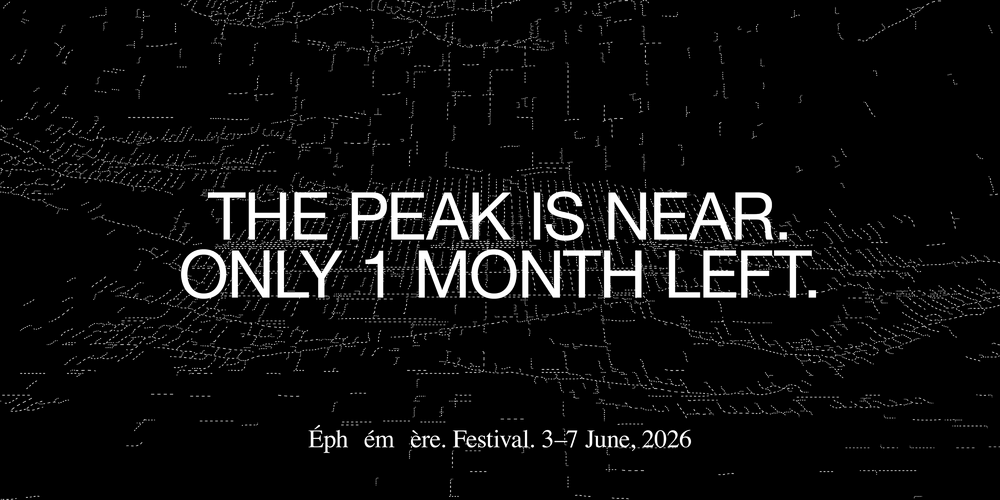
Eröffnung: 3. Juni 2026, 18.00 Uhr; Veranstaltung bis 7. Juni 2026 diverse Standorte in Linz
Im Anschluß an die Eröffnung am 3. Juni 2026:
Opening Tours und Opening Night
Die Kunstuniversität Linz ist auch 2026 wieder am Festival für Kunst in digitalen Kontexten und öffentlichen Räumen beteiligt.
LINZ FMR, das Festival für Kunst in digitalen Kontexten und öffentlichen Räumen, findet im Juni 2026 bereits zum vierten Mal statt. Nach FMR 19 entlang der Linzer Donaulände, FMR 21 rund um den Linzer Mühlkreisbahnhof und FMR 23 im südlichen Linzer Hafenviertel wird dieses Mal der Linzer Schlossberg in einen offenen und frei zugänglichen Kunstraum transformiert. FMR 26 bringt eine große Ausstellung rund um Schauplätze wie den Schlosspark, das Schlossmuseum, das Friedrichstor, das Rudolfstor, den Schlossbergstollen, den Rosengarten, die Keplerwiese oder die Martinskirche nach Linz. Gezeigt werden Arbeiten von zahlreichen nationalen und internationalen Künstler*innen aus dem Bereich Medienkunst, digitaler Kunst und Internetkunst, darunter Joerg Auzinger (AT), Herr Clair (DE), Computer Lars & Leander Gussmann (DK/AT), Ahmed Jamal, Emma Silvana Tripaldi & Till Schönwetter (EG/IT/DE), k0j0 (CN/US), Selma Kjesen (SE), Sara Koniarek & Matilda Bjärum (AT/SE), Abel Korinsky (DE), Lila Rui Lan (CN), MAalex (IT), Aisling Phelan (IE), †een▲ge g☺d (US/FR) und YuFu (CN).
Am Programm stehen außerdem Vorträge und Gespräche zu Themen wie „Digital Afterlife and Immortality“, „Future Archaeology and Digital Artifacts“, „Digital Deceleration, Isolation, and the New Idyll“ und „AI Societies, Power Structures, and Resistance“. Bei der Opening Night am Mittwoch, den 3. Juni und bei der Concert Night am Freitag, den 5. Juni, gibt es Live-Acts und DJ-Sets aus dem Bereich der experimentellen elektronischen Musik zu erleben. Dazu kommen tägliche Performances der beteiligten Künstler*innen am Festivalgelände sowie Rundgänge mit Kunstvermittler*innen und Kurator*innen.
Für das Festival verantwortlich zeichnet der Verein „LINZ FMR – Kunst in digitalen Kontexten und öffentlichen Räumen“. Er wurde von den Kunst- und Kulturinitiativen qujOchÖ und servus.at, dem Atelierhaus Salzamt der Stadt Linz, der Kunstuniversität Linz und der Sturm und Drang Galerie gegründet. FMR 26 wird von der Stadt Linz als UNESCO City of Media Arts, dem Land Oberösterreich und dem Bundesministerium für Wohnen, Kunst, Kultur, Medien und Sport sowie von zahlreichen Organisationen und Unternehmen unterstützt."
Ephemere Grüße vom Festival-Team!