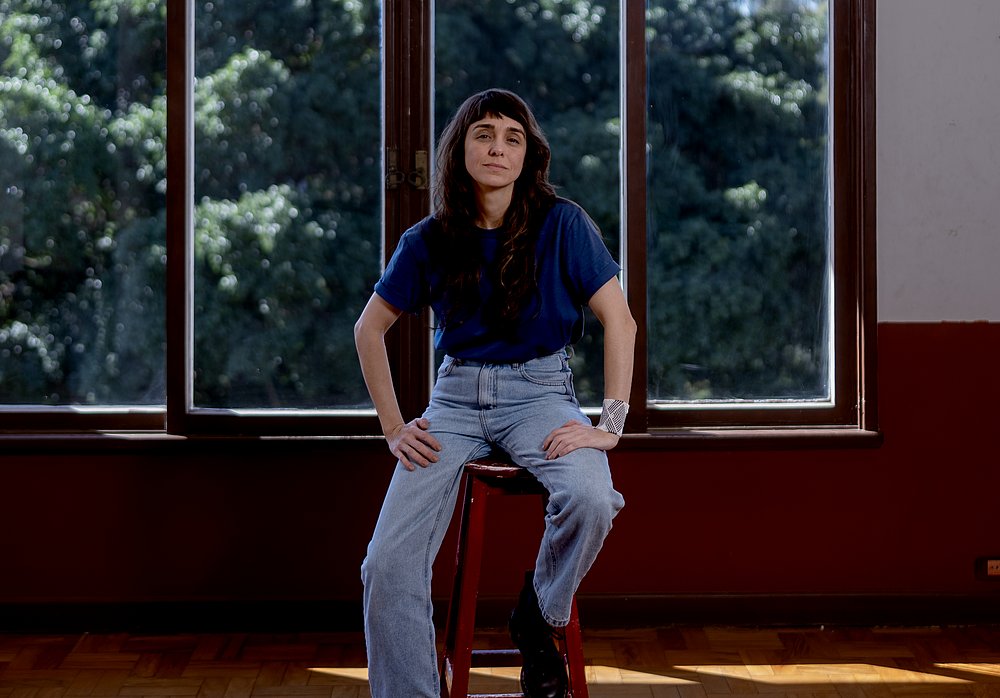
Gratulation zum DOC-Stipendium der ÖAW
Wir möchten ganz herzlich Flora Dias gratulieren, die für ihr PhD-Projekt das DOC-Stipendium der Österreichischen Akademie der Wissenschaften (ÖAW) erhält.
In ihrem Forschungsprojekt „Over the Plateau – Cinematic experiments and Interdisciplinary encounters in Ancestry and Territory“ wird Flora Dias von Prof. Dr. Silke Felber betreut. Dass mit diesem Vorhaben ein PhD-Projekt der Kunstuniversität Linz mittels DOC-Stipendium gefördert wird, freut uns besonders.
Seit Frühjahr 2026 ist Flora Dias PhD-Kandidatin an der Kunstuniversität Linz. Im September 2026 beginnt für sie das dreijährige Stipendium.
Abstract
This research explores how sensorial, non-linear cinematic Fiction can reframe erased or marginalized political, historical, and ecological narratives. Taking the Piratininga Plateau – site of the founding of São Paulo in 1554 and a locus of colonial violence against Indigenous peoples and Brazilian ecosystems – as its point of departure, the project investigates theentangled layers of ancestry and memory of the native communities and landscapes across centuries. The study unfolds in parallel with the development of the fiction feature film Sobre o Planalto (Over the Plateau), which tells the story of Ana, an Indigenous teacher in 2026, and Aiyra, a Tupi woman from the 1500s, whose encounter disrupts linear chronology and activates trans-temporal co-existences of humans, plants, and animals. The methodology bridges artistic practice with interdisciplinary endeavor, spanning archival counter-readings of colonial historiography, collaborations with Indigenous leaders, and botanical research in European collections. Through these approaches, the project addresses interspecies relations, plant species as agents of memory, and the poetics of ancestry as narrative and aesthetic strategies. Grounded in a constellation of decolonial and counter-hegemonic perspectives, the research positions cinema as both an archival and ritual practice: a form that manifests traces of silenced histories, while generating spaces of relation. By mobilizing experimental language as a mode of inquiry, this work aims to propose new forms of knowledge that resist universalizing frameworks and instead affirm partial, situated, and affective perspectives. In doing so, it contributes to broader debates in artistic research, cultural studies and ecological justice, while framing cinema as a medium for alliance and survival across temporal and epistemic divides.