Welcome at the Interface Culture program website.
Acting as creative artists and researchers, students learn how to advance the state of the art of current interface technologies and applications. Through interdisciplinary research and team work, they also develop new aspects of interface design including its cultural and social applications. The themes elaborated under the Master's programme in relation to interactive technologies include Interactive Environments, Interactive Art, Ubiquitous Computing, game design, VR and MR environments, Sound Art, Media Art, Web-Art, Software Art, HCI research and interaction design.

The Interface Culture program at the Linz University of Arts Department of Media was founded in 2004 by Christa Sommerer and Laurent Mignonneau. The program teaches students of human-machine interaction to develop innovative interfaces that harness new interface technologies at the confluence of art, research, application and design, and to investigate the cultural and social possibilities of implementing them.
The term "interface" is omnipresent nowadays. Basically, it describes an intersection or linkage between different computer systems that makes use of hardware components and software programs to enable the exchange and transmission of digital information via communications protocols.
However, an interface also describes the hook-up between human and machine, whereby the human qua user undertakes interaction as a means of operating and influencing the software and hardware components of a digital system. An interface thus enables human beings to communicate with digital technologies as well as to generate, receive and exchange data. Examples of interfaces in very widespread use are the mouse-keyboard interface and graphical user interfaces (i.e. desktop metaphors). In recent years, though, we have witnessed rapid developments in the direction of more intuitive and more seamless interface designs; the fields of research that have emerged include ubiquitous computing, intelligent environments, tangible user interfaces, auditory interfaces, VR-based and MR-based interaction, multi-modal interaction (camera-based interaction, voice-driven interaction, gesture-based interaction), robotic interfaces, natural interfaces and artistic and metaphoric interfaces.
Artists in the field of interactive art have been conducting research on human-machine interaction for a number of years now. By means of artistic, intuitive, conceptual, social and critical forms of interaction design, they have shown how digital processes can become essential elements of the artistic process.
Ars Electronica and in particular the Prix Ars Electronica's Interactive Art category launched in 1991 has had a powerful impact on this dialog and played an active role in promoting ongoing development in this field of research.
The Interface Cultures program is based upon this know-how. It is an artistic-scientific course of study to give budding media artists and media theoreticians solid training in creative and innovative interface design. Artistic design in these areas includes interactive art, netart, software art, robotic art, soundart, noiseart, games & storytelling and mobile art, as well as new hybrid fields like genetic art, bioart, spaceart and nanoart.
It is precisely this combination of technical know-how, interdisciplinary research and a creative artistic-scientific approach to a task that makes it possible to develop new, creative interfaces that engender progressive and innovative artistic-creative applications for media art, media design, media research and communication.
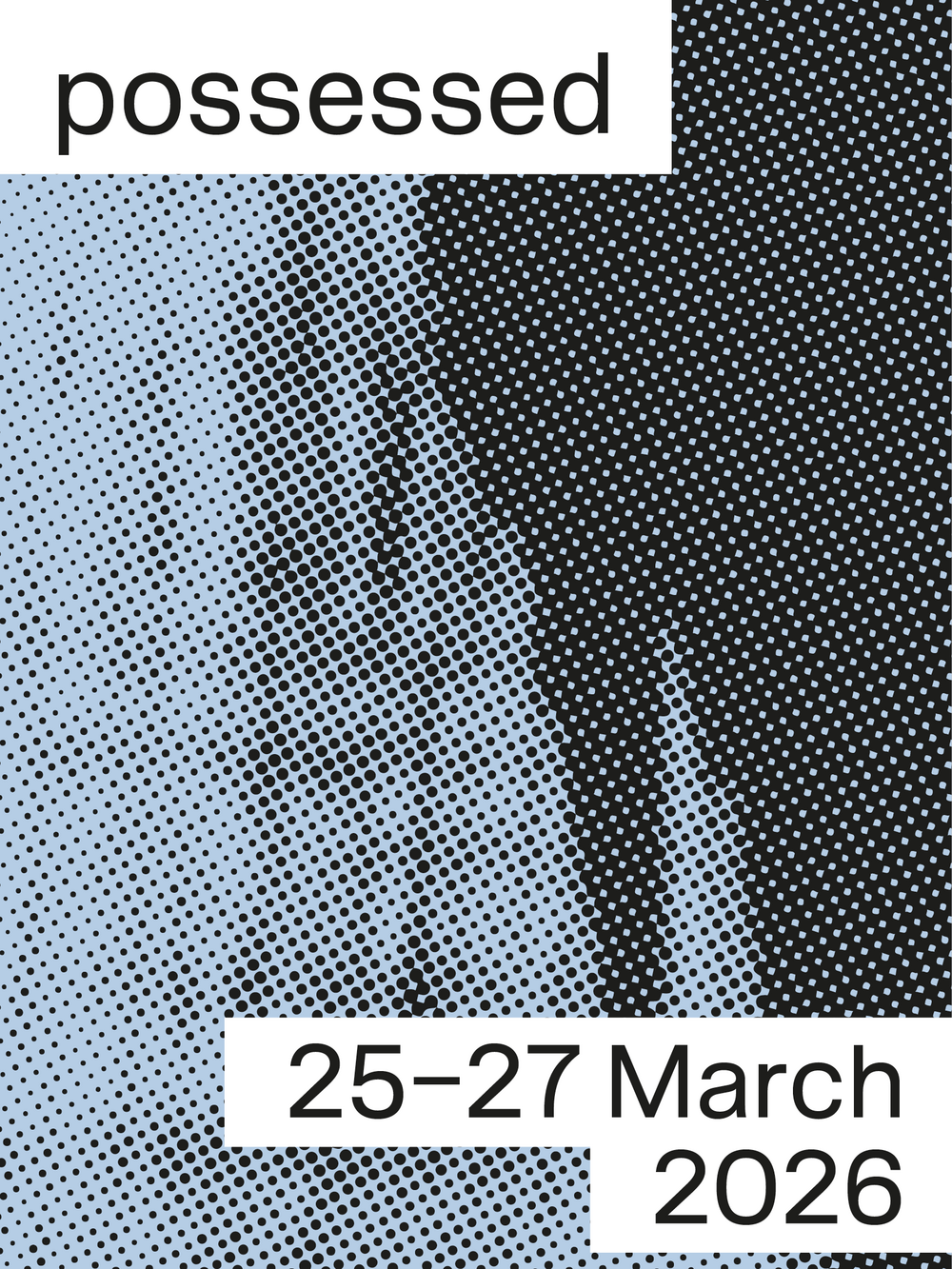
possessed
25. bis 27. März 2026 ifk Arkade, Reichsratsstr. 17, 1010 Wien
Possession is more than having something at one‘s disposal. Possession is also persecution, an affliction and a salvaging of people, things and territories. This conference follows the traces of possession in spaces, bodies and relationships. We inquire into the good and bad spirits that ownership spawns and the feedback that develops between possession and obsession. Possession appears in different forms: as private property, as personal and intimate objects that bring us a feeling of security, or as a means of appropriation. Private property draws boundaries and excludes many from their means of survival, their living space and their capacity for participation. Personal objects, on the other hand, may be unsellable, but are nevertheless painful when stripped from »their« person. Gifts, relics or keepsakes become part of people and carry traces of affects and histories. Sometimes, we no longer have access to these—other times, we are unable to resist their pull. Claims of possession accompany violence and expansion, whether in the form of bodily violence or in the act of taking possession of life and land. Sometimes possession even appears trivial, in the countless anonymous objects that accumulate in our daily lives. At the center of this conference are questions of ownership and persecution, access and refuge. New approaches from cultural studies and cultural anthropology—on hauntology, new animism, Freud's uncanny, fetish, new materialism or nature cultures open up pathways to think about possession and the reciprocal obsession between things and humans.
Concept: Andreas Gehrlach (ifk Wien), Andreas Streinzer (Universität Wien)
Participants: Alice von Bieberstein (Berlin), Judith Bovensiepen (Wien), Isabel Bredenbröker (Bremen), Iketina Danso (Wien), Çağla Gillis (Linz/Istanbul), Gabu Heindl (Wien), Cari Maier (Wien), Stephan Pühringer (Linz), Olga Shcheblykina (Linz/Wien), Victor Strazzeri (Ljubljana), Samo Tomšič (Dresden), Sinthujan Varatharajah (Berlin)
---
Program
Wednesday, 25 March 2026
14:00 Welcome and Introduction: Andreas Gehrlach and Andreas Streinzer
14:30 Stephan Pühringer: The Opaque Parallel-World of the Oligarchic Wealth Elite. On the Political Economy of Wealth Concentration in Austria
16:00 Isabel Bredenbröker: Haunted by »Cultural Possessions«. Contested Ownership and Uncanny Agencies in Colonial Collections
17:00 Judith Bovensiepen: Empty Lands
Thursday, 26 March 2026
10:00 Victor Strazzeri: Things Possessed. On the Object-Subjects of Reification
11:00 Samo Tomšič: Ressentiment Between Property and Expropriation
14:00 Andreas Gehrlach: Stufen des Eigentums
15:00 Alice von Bieberstein: Finance as Ghosting Machine. Dispossession, Liquidation and the Afterlives of the Armenian Genocid
17:00 Çağla Gillis: Block E, No. 5: An Exploration of Being Held by a Place. (Film Screening and Talk with Andreas Gehrlach)
18:00 Sinthujan Varatharajah: Possessing Belonging. Statelessness and the Material Logic of the Nation-State
Friday, 27 March 2026
10:00 Cari Maier: Ein flüchtiges Selbst. Sorge zwischen Eigentum und Enteignung
11:00 Gabu Heindl: Vom gewaltvollen Leerstehen-Machen zum machtvollen InstandBesetzen. Eigentumsbegriffe zur Leerstandskritik
12:00 Olga Shcheblykina: Things I Tried to Keep. (Artist Talk with Julia Boog-Kaminski)
14:00 Iketina Danso: Zweifelhafte Vergnügungen. Reframing Colonial Histories in Vienna Leopoldstadt