Welcome at the Interface Culture program website.
Acting as creative artists and researchers, students learn how to advance the state of the art of current interface technologies and applications. Through interdisciplinary research and team work, they also develop new aspects of interface design including its cultural and social applications. The themes elaborated under the Master's programme in relation to interactive technologies include Interactive Environments, Interactive Art, Ubiquitous Computing, game design, VR and MR environments, Sound Art, Media Art, Web-Art, Software Art, HCI research and interaction design.

The Interface Culture program at the Linz University of Arts Department of Media was founded in 2004 by Christa Sommerer and Laurent Mignonneau. The program teaches students of human-machine interaction to develop innovative interfaces that harness new interface technologies at the confluence of art, research, application and design, and to investigate the cultural and social possibilities of implementing them.
The term "interface" is omnipresent nowadays. Basically, it describes an intersection or linkage between different computer systems that makes use of hardware components and software programs to enable the exchange and transmission of digital information via communications protocols.
However, an interface also describes the hook-up between human and machine, whereby the human qua user undertakes interaction as a means of operating and influencing the software and hardware components of a digital system. An interface thus enables human beings to communicate with digital technologies as well as to generate, receive and exchange data. Examples of interfaces in very widespread use are the mouse-keyboard interface and graphical user interfaces (i.e. desktop metaphors). In recent years, though, we have witnessed rapid developments in the direction of more intuitive and more seamless interface designs; the fields of research that have emerged include ubiquitous computing, intelligent environments, tangible user interfaces, auditory interfaces, VR-based and MR-based interaction, multi-modal interaction (camera-based interaction, voice-driven interaction, gesture-based interaction), robotic interfaces, natural interfaces and artistic and metaphoric interfaces.
Artists in the field of interactive art have been conducting research on human-machine interaction for a number of years now. By means of artistic, intuitive, conceptual, social and critical forms of interaction design, they have shown how digital processes can become essential elements of the artistic process.
Ars Electronica and in particular the Prix Ars Electronica's Interactive Art category launched in 1991 has had a powerful impact on this dialog and played an active role in promoting ongoing development in this field of research.
The Interface Cultures program is based upon this know-how. It is an artistic-scientific course of study to give budding media artists and media theoreticians solid training in creative and innovative interface design. Artistic design in these areas includes interactive art, netart, software art, robotic art, soundart, noiseart, games & storytelling and mobile art, as well as new hybrid fields like genetic art, bioart, spaceart and nanoart.
It is precisely this combination of technical know-how, interdisciplinary research and a creative artistic-scientific approach to a task that makes it possible to develop new, creative interfaces that engender progressive and innovative artistic-creative applications for media art, media design, media research and communication.
Inner Radiance
Performance Premiere: 22. Mai 2026, 19.00 bis 19.45 Uhr Ars Electronica Center, Deep Space 8k, Ars-Electronica-Straße 1, Linz
Deep Space Experience
Ein Projekt von Kevin Blackistone, Interface Cultures Absolvent und Lehrender.
A critical dance and performance exploration of the of the bodily interior.
What are the hidden worlds within us? Can we find new ways to perceive them and make them real? How can we de-clinisize and de-pathologize representations of that part of us which is hidden beneath the flesh. How can excavating the unseen layers of the human organism permit us to better internalize our human commonalities and connections?
Inner Radiance approaches these questions through a first-of-it’s-kind performance in which live medical ultrasound will be used to generate 3d volumes with which the dancers will interact; choreographically performing with their own interior selves. Through this piece the dancers will become part of the visual design as their scans are translated into forms not only physically representative but also abstracted through exchange of temporal and physical dimensions. By performatively engaging with medical technology beyond it’s diagnostic contexts, this performance presents the wonder of the human organism absent concerns of pathology, and the visual boundary of the flesh to inspire considerations on how the biases of later frequently affect the care of the former.
Choreography and Movement: Ariathney Coyne Laura Gagliardi
Concept, visual design and sound composition: Kevin Blackistone
About the Artists
Kevin Blackistone (1978 US/AT) is an transdisciplinary media artist and researcher using immersive, tangible, participatory and performative elements as tools for exploratory engagements. His current focus investigates the networks and cross-interactions between our human organism(s), its habitats & inhabitants, and their technological interrelations from cultural, medical and ecological perspectives. His research background includes a BA in Intermedia and Digital Arts (US), post-bacc research with the Laboratory of Neurogenetics (US), MAs from both the Interface Cultures and Postdigital Lutherie programs (AT), and conducted research in exchange with the Digital Nature Group of Tsukuba University (JP). He has shown, performed and exhibited works at festivals and venues including Ars Electronica Festival (AT), Siggraph Asia (JP & AU), Zeiss-Großplanetarium (DE), Miraikan (JP), City Digital Skin Arts (CN/SG/IT/DE) and Cang Art Museum (CN). His research has receive awards including the inaugural Johns Hopkins Saul Zaentz Innovation Fund, Rubys Arts Award and the Linz Media Arts Award. He currently instructs immersive interactive performance & movement narratives at Linz University of Art and Design in collaboration with Anton Bruckner University and the Ars Electronica Center and facilitates the Neurotechnology Spring School and Hackathon for Interface Cultures department.
Ariathney Coyne (1994) is a Greek/US-American professional dancer and artist raised in Vienna, Austria. After completing a masters in neuroscience at UCL she continued her journey with movement in partner acrobatics, handstands and her first love: dance. This led her to study movement research and media arts in Linz and Berlin. She thrives in collaborative and creative environments, is guided by curiosity, improvisation, experimentation, and has had the pleasure to work with artists such as Claudia Bosse, Michikazu Matsune, and Silke Grabinger.
Laura Gagliardi graduated in Biological Sciences at the University of Ferrara (BSc) and Contemporary Dance at Trinity Laban Conservatoire in London (BA) and Anton Bruckner University in Linz (MA).
Since 2013, Laura has been an active member of Laura Boato's Association INDACO-Incontri di Danza Contemporanea. Since 2020, she has been an associate artist of D.Id, one of Austria's leading choreographic centres, founded and directed by Liz King. Since 2021 she has taken part in the Inner Suspension project, directed by choreographer Susanne Linke. From 2023 she collaborates with the Compagnia Tocnadanza in Venice directed by Michela Barasciutti, who entrusts her with three choreographies created in residence at the Centro Produzioni in Venice. Between November 2024 and January 2025 Laura curates the dance project for the community at the M9 museum in Mestre in the space of the temporary exhibition BURTYNSKY: Extraction/Abstraction. She is also the director of the 20th edition of the dance festival A Piede Libero in Mogliano Veneto. Laura presents several works at international festivals including Varallo Festival, Ried im Innkreis Hörsturm Festival, Eisenstadt D.iD Festival, Linz Ars Electronic Festival. She is trainer of GYROTONIC®️and GYROKINESIS®️method.
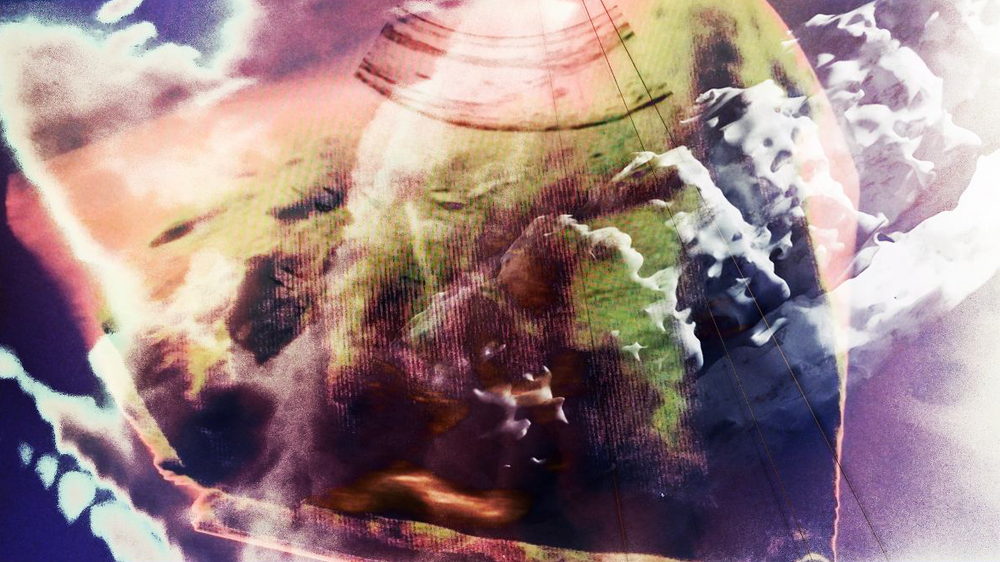
Deep Space Experience: Inner Radiance; Credit: Kevin Blackistone