Welcome at the Interface Culture program website.
Acting as creative artists and researchers, students learn how to advance the state of the art of current interface technologies and applications. Through interdisciplinary research and team work, they also develop new aspects of interface design including its cultural and social applications. The themes elaborated under the Master's programme in relation to interactive technologies include Interactive Environments, Interactive Art, Ubiquitous Computing, game design, VR and MR environments, Sound Art, Media Art, Web-Art, Software Art, HCI research and interaction design.

The Interface Culture program at the Linz University of Arts Department of Media was founded in 2004 by Christa Sommerer and Laurent Mignonneau. The program teaches students of human-machine interaction to develop innovative interfaces that harness new interface technologies at the confluence of art, research, application and design, and to investigate the cultural and social possibilities of implementing them.
The term "interface" is omnipresent nowadays. Basically, it describes an intersection or linkage between different computer systems that makes use of hardware components and software programs to enable the exchange and transmission of digital information via communications protocols.
However, an interface also describes the hook-up between human and machine, whereby the human qua user undertakes interaction as a means of operating and influencing the software and hardware components of a digital system. An interface thus enables human beings to communicate with digital technologies as well as to generate, receive and exchange data. Examples of interfaces in very widespread use are the mouse-keyboard interface and graphical user interfaces (i.e. desktop metaphors). In recent years, though, we have witnessed rapid developments in the direction of more intuitive and more seamless interface designs; the fields of research that have emerged include ubiquitous computing, intelligent environments, tangible user interfaces, auditory interfaces, VR-based and MR-based interaction, multi-modal interaction (camera-based interaction, voice-driven interaction, gesture-based interaction), robotic interfaces, natural interfaces and artistic and metaphoric interfaces.
Artists in the field of interactive art have been conducting research on human-machine interaction for a number of years now. By means of artistic, intuitive, conceptual, social and critical forms of interaction design, they have shown how digital processes can become essential elements of the artistic process.
Ars Electronica and in particular the Prix Ars Electronica's Interactive Art category launched in 1991 has had a powerful impact on this dialog and played an active role in promoting ongoing development in this field of research.
The Interface Cultures program is based upon this know-how. It is an artistic-scientific course of study to give budding media artists and media theoreticians solid training in creative and innovative interface design. Artistic design in these areas includes interactive art, netart, software art, robotic art, soundart, noiseart, games & storytelling and mobile art, as well as new hybrid fields like genetic art, bioart, spaceart and nanoart.
It is precisely this combination of technical know-how, interdisciplinary research and a creative artistic-scientific approach to a task that makes it possible to develop new, creative interfaces that engender progressive and innovative artistic-creative applications for media art, media design, media research and communication.
Interface Cultures@ Linz FMR
Eröffnung: 3. Juni 2026; Ausstellung bis 7. Juni 2026 Linz Schlossberg
Beteiligung von Interface Cultures Studierenden am FMR Festival
Interface Cultures is delighted to present a strong participation of our students at this year’s FMR Festival Linz. Linz FMR Festival brings together works by Aisling Phelan, Ahmed Jamal, Emma Silvana Tripaldi, Till Schönwetter, Martina Pizzigoni, and Alessia Fallica in collaboration with Luigi Grande and Marta Perrone, presented at Linz Schlossberg.
Detailed descriptions of the individual projects and artistic contributions:
‘This Person Did Not Exist’
Aisling Phelan
Outdoor Installation
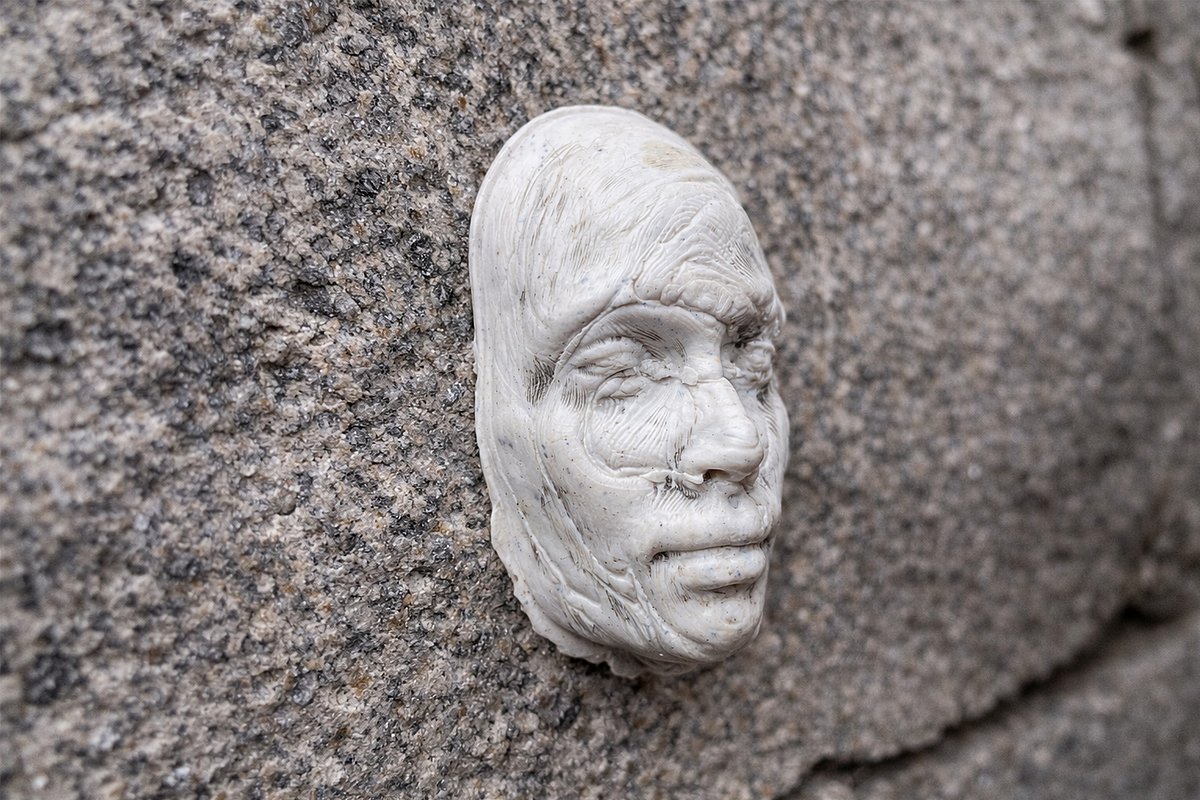
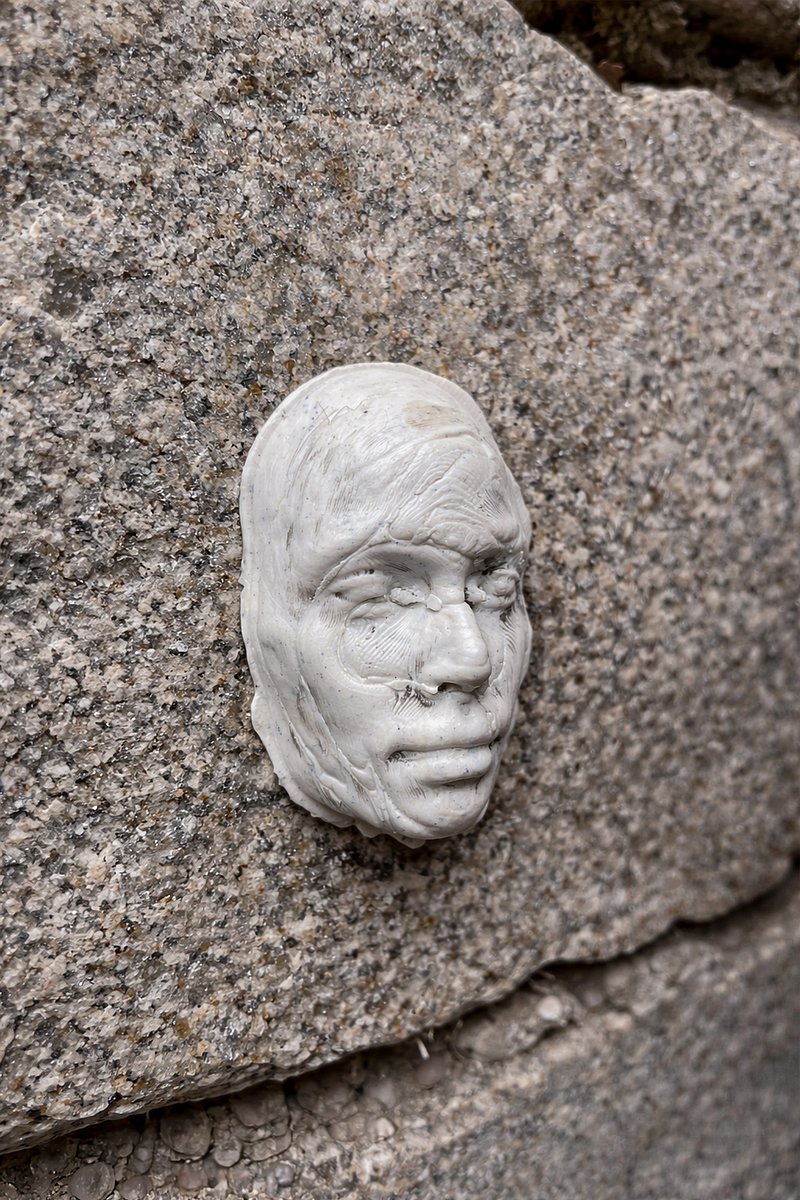
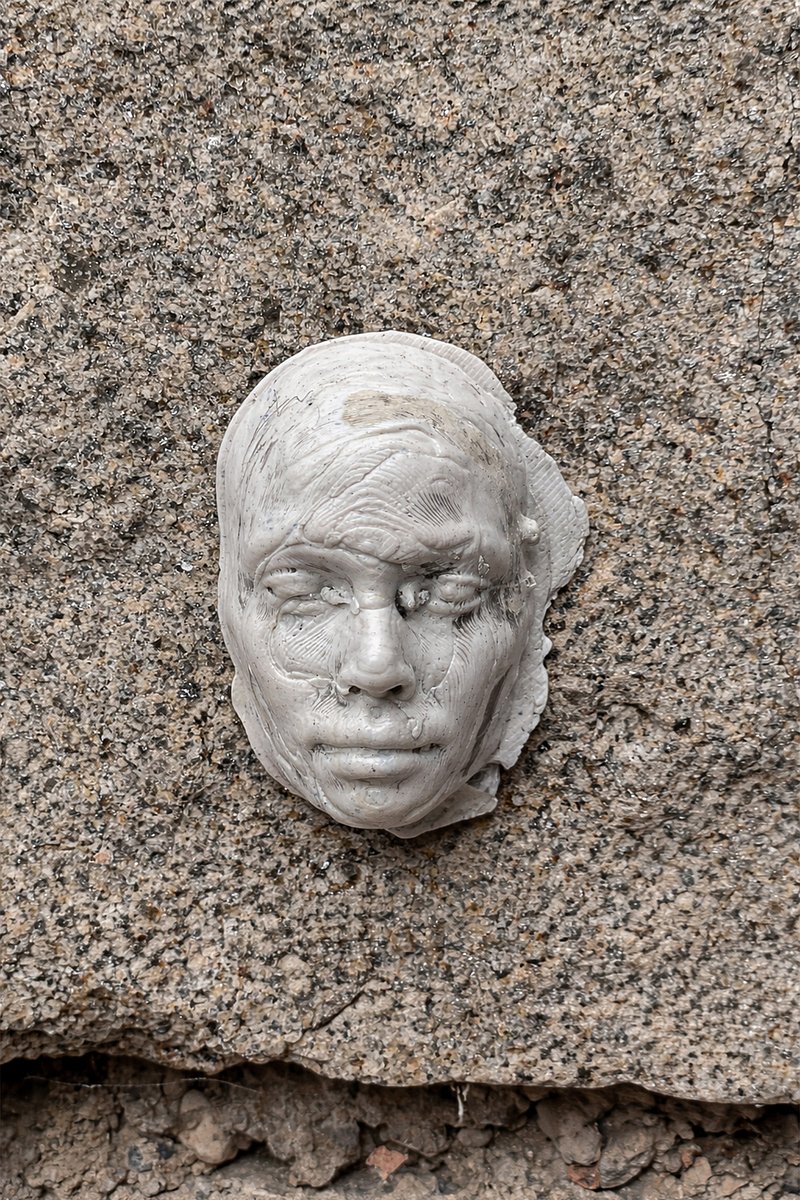
‘This Person Did Not Exist’ is a site-specific sculptural installation examining the translation of synthetic identities into physical form. Algorithmically generated faces produced using a generative adversarial network (GAN), thispersondoesnotexist.com, are reconstructed as digital characters and fabricated as full-face masks in recycled plastic using moulding and casting techniques.
By translating these images into sculptural form, the work situates computationally generated identities within physical space, prompting reflection on how images derived from vast, untraceable datasets of human likeness acquire material presence and persist beyond the screen. Situated within the landscape of the Schlossberg, the masks expose the translation of aggregated human data into fixed, tangible forms.
aislingphelan.cargo.site
‘DreamAtlas’
Ahmed Jamal, Emma Silvana Tripaldi, Till Schönwetter
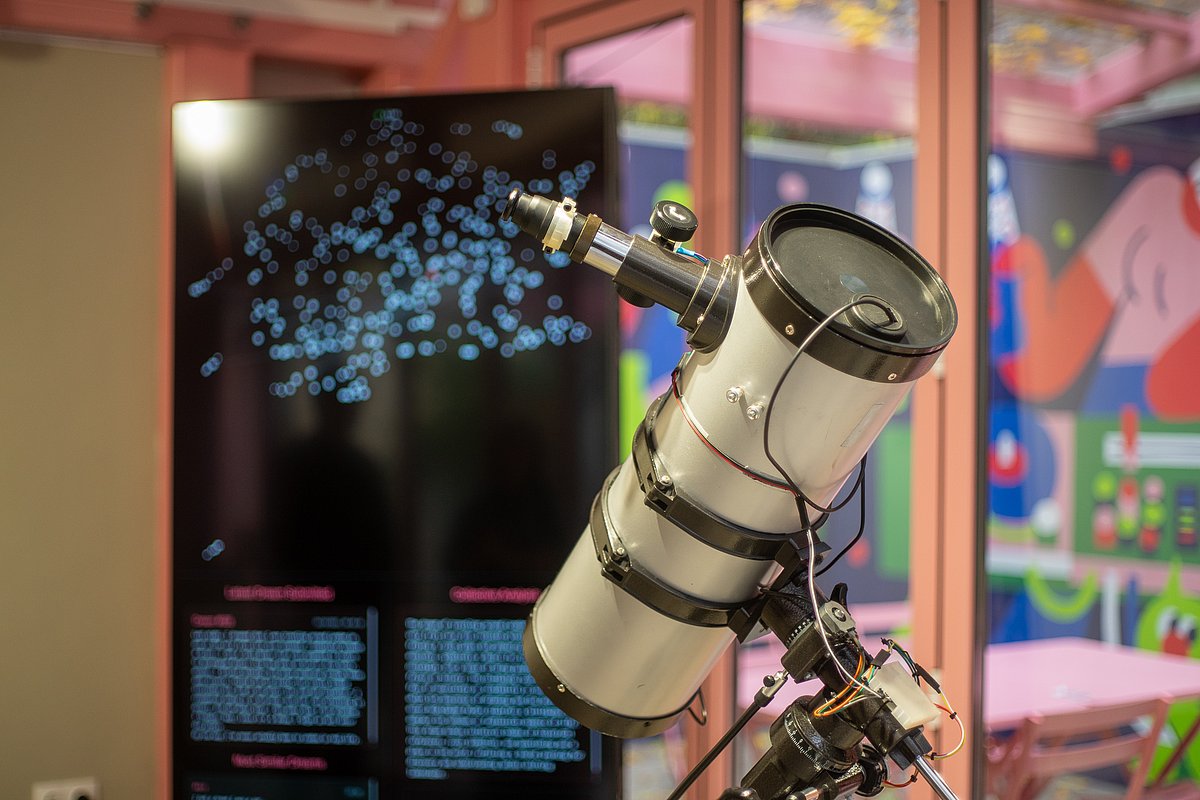
DreamAtlas is a participatory web platform and artwork that transforms dream-sharing into an exploration of collective subconscious patterns. Visitors anonymously contribute their dreams, which are analyzed through natural language processing to detect emotional tones, recurring symbols, and thematic resonances. Each dream becomes a node in an ever-growing constellation, where dreams sharing emotions or imagery (falling, flying, losing teeth...) gravitate toward one another, revealing threads that bind individual experiences into a shared landscape.
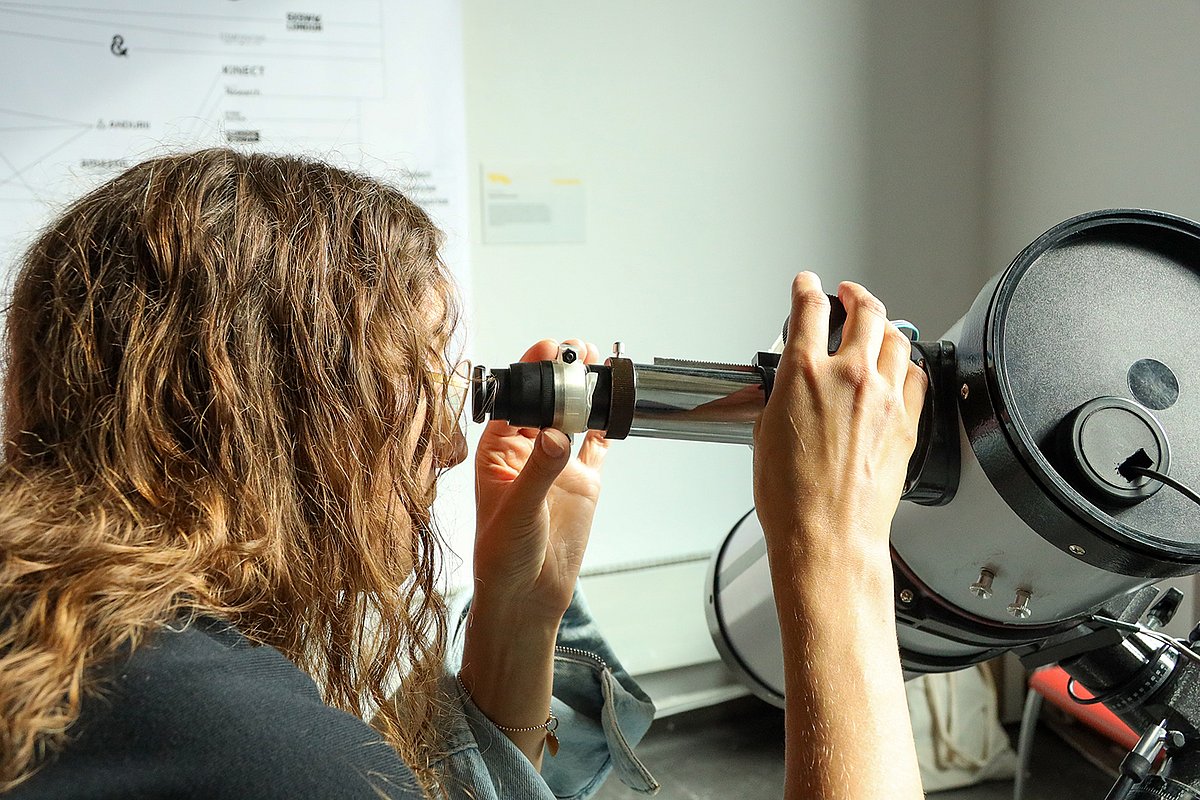
Alongside the online platform, DreamAtlas exists as an installation featuring a repurposed telescope. Modified and equipped with electronics, this tool traditionally used for gazing outward into space becomes an interface for navigating inward through the dream constellation. Next to it sits a cyberdeck terminal, inviting visitors to contribute their own dreams and join the map.
The project has been shown at Da Fest 10 in Sofia and Ars Electronica Festival 2025 in Linz, where it received an honorary mention from the Campus Award. As the constellation grows, DreamAtlas becomes a living archive of collective imagination, rendering dreams as interconnected stars in a shared sky. It invites us to wonder not only what our dreams mean, but how they mean together.

‘Tutta Notte Buia, Ritual Echoes’
MAalex (Martina Pizzigoni and Alessia Fallica)
Live performance with Luigi Grande and Marta Perrone
at Martinskirche (Church of St. Martin), 4020 Linz (AT)
Tutta Notte Buia (2025), Interactive real-time installation
Tutta Notte Buia, Ritual Echoes (2026), Live performance with Luigi Grande and Marta Perrone
Our digital identity is not just what we create. It is an aggregate of partial data, misattributions, and namesakes, forming an unstable, fragmented self. For those who have little to no digital presence, disappearance from the internet can mean definitive social death. Conversely, in a world that increasingly defines us through data, how important is immortality, and how much of our identity is dictated by its persistence? Do we truly want to vanish, or do we fear being erased? Tutta Notte Buia is an interactive installation that reimagines the ancient mourning rituals of the ‘chiangimuerti’ from Southern Italy, through a speculative act of digital erasure. Through an interactive web interface, participants can input their name and email, triggering a real-time data extraction from the internet. Their retrieved information is displayed, confronting them with their own digital traces. A final question emerges: Do you want to be forgotten?
The project is part of the ‘Death on the Internet’ series that began with ‘I Died on Facebook’ in 2023, in which MAalex investigated the fate of digital remains and the transmission of memory online. It was initiated through the Traumstipendium 2024 award by Energie AG and OÖ Landes-Kultur GmbH.
At FMR 26, MAalex is joined for a live music performance by Luigi Grande and Marta Perrone. Luigi Grande is a pianist, electronic musician, and artist, currently graduating from the European Master NAIP in Groningen. Marta Perrone is a pianist and singer- songwriter, based in Dublin.


