Welcome at the Interface Culture program website.
Acting as creative artists and researchers, students learn how to advance the state of the art of current interface technologies and applications. Through interdisciplinary research and team work, they also develop new aspects of interface design including its cultural and social applications. The themes elaborated under the Master's programme in relation to interactive technologies include Interactive Environments, Interactive Art, Ubiquitous Computing, game design, VR and MR environments, Sound Art, Media Art, Web-Art, Software Art, HCI research and interaction design.

The Interface Culture program at the Linz University of Arts Department of Media was founded in 2004 by Christa Sommerer and Laurent Mignonneau. The program teaches students of human-machine interaction to develop innovative interfaces that harness new interface technologies at the confluence of art, research, application and design, and to investigate the cultural and social possibilities of implementing them.
The term "interface" is omnipresent nowadays. Basically, it describes an intersection or linkage between different computer systems that makes use of hardware components and software programs to enable the exchange and transmission of digital information via communications protocols.
However, an interface also describes the hook-up between human and machine, whereby the human qua user undertakes interaction as a means of operating and influencing the software and hardware components of a digital system. An interface thus enables human beings to communicate with digital technologies as well as to generate, receive and exchange data. Examples of interfaces in very widespread use are the mouse-keyboard interface and graphical user interfaces (i.e. desktop metaphors). In recent years, though, we have witnessed rapid developments in the direction of more intuitive and more seamless interface designs; the fields of research that have emerged include ubiquitous computing, intelligent environments, tangible user interfaces, auditory interfaces, VR-based and MR-based interaction, multi-modal interaction (camera-based interaction, voice-driven interaction, gesture-based interaction), robotic interfaces, natural interfaces and artistic and metaphoric interfaces.
Artists in the field of interactive art have been conducting research on human-machine interaction for a number of years now. By means of artistic, intuitive, conceptual, social and critical forms of interaction design, they have shown how digital processes can become essential elements of the artistic process.
Ars Electronica and in particular the Prix Ars Electronica's Interactive Art category launched in 1991 has had a powerful impact on this dialog and played an active role in promoting ongoing development in this field of research.
The Interface Cultures program is based upon this know-how. It is an artistic-scientific course of study to give budding media artists and media theoreticians solid training in creative and innovative interface design. Artistic design in these areas includes interactive art, netart, software art, robotic art, soundart, noiseart, games & storytelling and mobile art, as well as new hybrid fields like genetic art, bioart, spaceart and nanoart.
It is precisely this combination of technical know-how, interdisciplinary research and a creative artistic-scientific approach to a task that makes it possible to develop new, creative interfaces that engender progressive and innovative artistic-creative applications for media art, media design, media research and communication.
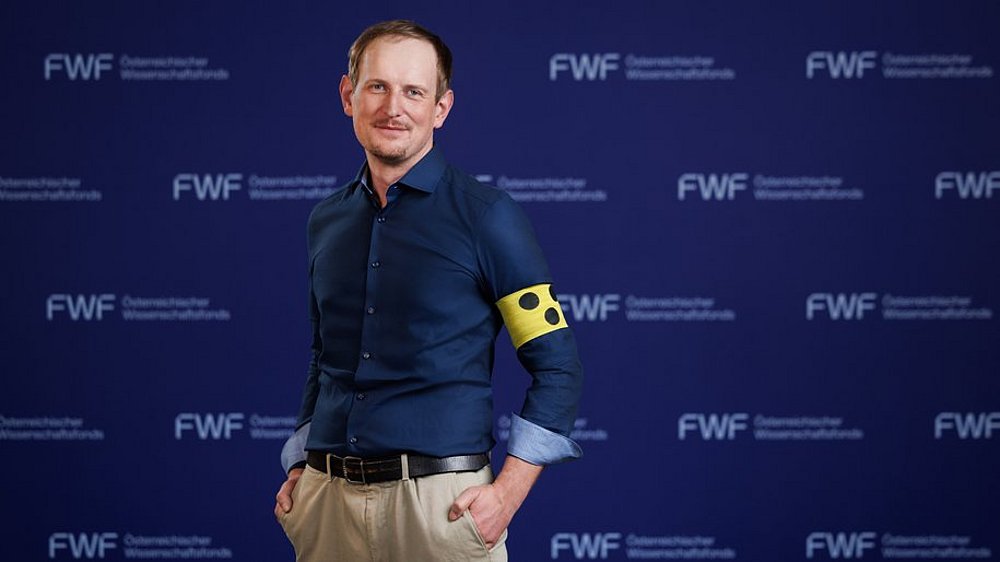
Hochdotierter FWF-ASTRA-Preis geht an Spitzenforscher David Krych
Für sein Projekt „homo novus - actor novus“ erhielt David Krych einen der begehrten mit einer Million Euro dotierten FWF-ASTRA-Preise. Das an der Kunstuniversität Linz, Abteilung Kulturwissenschaft, angesiedelte Projekt untersucht anhand von Schauspieltheorien, Aufführungen und historischen Dokumenten, wie Vorstellungen eines „neuen Menschen“ (Homo novus) in den Jahren nach dem ersten Weltkrieg nicht nur gedacht, sondern auf der Bühne durch „neue Akteur*innen“ (Actor novus) erprobt und gestaltet wurden.
Mag. Mag. Dr. David Krych ist, gemeinsam mit Silke Felber (Professorin für Wissensgeschichte an der Kunstuniversität Linz), Herausgeber der mehrsprachigen Zeitschrift ephemer. Das Journal schafft eine Plattform zur Förderung des Austauschs zwischen künstlerischer Forschung und theoretischer Reflexion im Feld der ephemeren Künste. David Krych ist zudem FWF-Esprit Fellow der Universität für Musik und darstellende Kunst Wien und gründete in Zusammenarbeit mit Prof. Dariusz Kosiński (Jagiellonen-Universität Krakau) und Prof. Tamara Trojanowska (University of Toronto) die internationale Schriftenreihe Theaterkulturen in Polen – Theater Cultures in Poland.
In seinem Projekt „homo novus - actor novus: Human and Acting Concepts in the Interwar Theater Avant-Gardes of Central and Eastern Europe“ untersucht David Krych anhand von Schauspieltheorien, Aufführungen und historischen Dokumenten, wie Vorstellungen eines „neuen Menschen“ (Homo novus) nicht nur gedacht, sondern auf der Bühne durch „neue Akteur*innen“ (Actor novus) erprobt und gestaltet wurden. Dadurch ergeben sich neue Perspektiven auf europäische Moderne, Theatergeschichte und Menschenkonzepte.
Hintergrund des Projektes: Nach dem Ersten Weltkrieg, nach dem industrialisierten Krieg und der Kränkung der „Humana“ wurde in Europa intensiv darüber diskutiert, was den Menschen in einer Zeit politischer Umbrüche, technischer Modernisierung und gesellschaftlicher Neuordnung ausmacht. Während diese Debatten bisher vor allem in Philosophie und Politik untersucht wurden, richtet David Krych in seinem ASTRA-Projekt den Blick auf das Theater. Im Zentrum stehen Avantgarden in Mittel- und Osteuropa zwischen 1918 und 1939.
Zum FWF-ASTRA-Preis
Um aufstrebende hochtalentierte Forschende im internationalen Wettbewerb zu halten und neue Talente zu gewinnen, vergibt der FWF heuer 18 FWF-ASTRA-Preise. Die mit jeweils rund einer Million Euro ausgestatteten Förderungen unterstützen fortgeschrittene Postdocs auf dem Weg an die Spitze ihres Forschungsfelds.
Die Ausgezeichneten überzeugten mit ihren Projektideen in einem hochkompetitiven Auswahlverfahren und bei einem Hearing vor einer internationalen Jury. Die Verteilung der geförderten Projekte verdeutlicht die thematische Vielfalt der Grundlagenforschung: Je etwa ein Drittel stammt aus den Naturwissenschaften und der Technik, der Biologie und Medizin sowie den Geistes- und Sozialwissenschaften.
Insgesamt begutachtete der FWF in der zweiten Ausschreibungsrunde der FWF-ASTRA-Preise Einreichungen von 170 Forschenden. Im Zuge der Programmreform erhöhte er die Gesamtfördersumme bei diesen hochkompetitiven Karriereförderungen auf 22 Millionen Euro, Forschende aus einem breiteren Themenspektrum kommen so zum Zug – bei einer ausgewogenen Beteiligung von Frauen: Unter den Ausgezeichneten sind elf Frauen, die ihre fünfjährigen Projekte an Universitäten und weiteren Forschungsstätten in ganz Österreich durchführen werden.
© FWF/Der Knopfdrücker