Welcome at the Interface Culture program website.
Acting as creative artists and researchers, students learn how to advance the state of the art of current interface technologies and applications. Through interdisciplinary research and team work, they also develop new aspects of interface design including its cultural and social applications. The themes elaborated under the Master's programme in relation to interactive technologies include Interactive Environments, Interactive Art, Ubiquitous Computing, game design, VR and MR environments, Sound Art, Media Art, Web-Art, Software Art, HCI research and interaction design.

The Interface Culture program at the Linz University of Arts Department of Media was founded in 2004 by Christa Sommerer and Laurent Mignonneau. The program teaches students of human-machine interaction to develop innovative interfaces that harness new interface technologies at the confluence of art, research, application and design, and to investigate the cultural and social possibilities of implementing them.
The term "interface" is omnipresent nowadays. Basically, it describes an intersection or linkage between different computer systems that makes use of hardware components and software programs to enable the exchange and transmission of digital information via communications protocols.
However, an interface also describes the hook-up between human and machine, whereby the human qua user undertakes interaction as a means of operating and influencing the software and hardware components of a digital system. An interface thus enables human beings to communicate with digital technologies as well as to generate, receive and exchange data. Examples of interfaces in very widespread use are the mouse-keyboard interface and graphical user interfaces (i.e. desktop metaphors). In recent years, though, we have witnessed rapid developments in the direction of more intuitive and more seamless interface designs; the fields of research that have emerged include ubiquitous computing, intelligent environments, tangible user interfaces, auditory interfaces, VR-based and MR-based interaction, multi-modal interaction (camera-based interaction, voice-driven interaction, gesture-based interaction), robotic interfaces, natural interfaces and artistic and metaphoric interfaces.
Artists in the field of interactive art have been conducting research on human-machine interaction for a number of years now. By means of artistic, intuitive, conceptual, social and critical forms of interaction design, they have shown how digital processes can become essential elements of the artistic process.
Ars Electronica and in particular the Prix Ars Electronica's Interactive Art category launched in 1991 has had a powerful impact on this dialog and played an active role in promoting ongoing development in this field of research.
The Interface Cultures program is based upon this know-how. It is an artistic-scientific course of study to give budding media artists and media theoreticians solid training in creative and innovative interface design. Artistic design in these areas includes interactive art, netart, software art, robotic art, soundart, noiseart, games & storytelling and mobile art, as well as new hybrid fields like genetic art, bioart, spaceart and nanoart.
It is precisely this combination of technical know-how, interdisciplinary research and a creative artistic-scientific approach to a task that makes it possible to develop new, creative interfaces that engender progressive and innovative artistic-creative applications for media art, media design, media research and communication.
Affinity Publisher | Erstellen professioneller Dokumente – von Portfolios über Ausstellungstexte bis hin zu komplexen Layouts
Termine: Dienstag, 6. und 20. Oktober, jeweils von 16.00 bis 20.00 Uhr Kunstuni Linz, Hörsaal D, Hauptplatz 6, 5. Stock, 4020 Linz und online
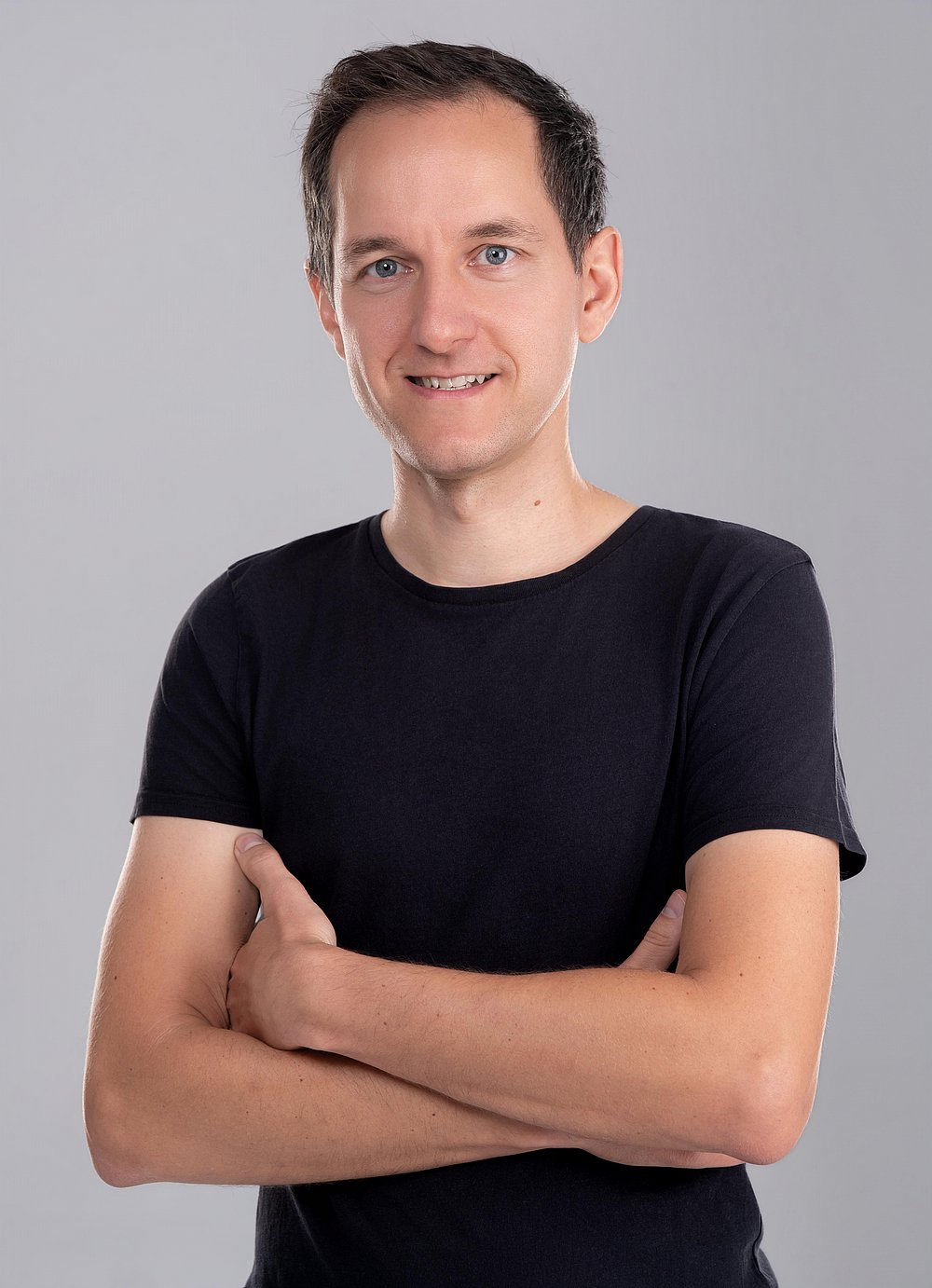
Referent: Martin Dörsch
In diesem zweiteiligen, Workshop lernst du, wie du mit Affinity Publisher professionelle Dokumente – von Portfolios über Ausstellungstexte bis hin zu komplexen Layouts – effizient und kreativ gestaltest.
Im Mittelpunkt steht der revolutionäre Ansatz: Statt zwischen verschiedenen Tools zu wechseln, bietet Affinity alles in einem Programm – von der Bildbearbeitung über Vektorgrafiken bis hin zum Layout. Das spart nicht nur Zeit, sondern eröffnet neue kreative Freiräume durch nahtlose Integration und Flexibilität.
Du entdeckst, wie du bestehendes Wissen (z. B. aus Adobe-Produkten) auf Affinity überträgst, produktive Workflows aufbaust und die KI nutzt, um dein Arbeiten zu beschleunigen und zu bereichern.
Der Workshop ist interaktiv und praxisnah und aufbauend – bringe gerne eigene Projekte oder Fragen mit, die wir gemeinsam lösen!
___________________________________________________________________
Martin Dörsch ist Content Creator und Educator mit langjähriger Erfahrung in digitalen Workflows und kreativer Lehre. Als Trainer für KI und allgemein in der Kreativbranche (u. a. LinkedIn Learning, WIFI OÖ, USTP, IT:U) verbindet er technisches Know-how mit didaktischer Präzision – immer mit dem Ziel, dir konkrete, sofort umsetzbare Fähigkeiten zu vermitteln.
Sein Motto: „Mein WARUM ist dein #besserwerden!“
Mehr unter www.martindoersch.at
___________________________________________________________________
Zu Affinity
Affinity ist eine professionelle Kreativsoftware-Suite von Serif (jetzt Canva), die als leistungsstarke, abofreie Alternative zu Adobe bekannt ist. Sie umfasst Programme für Bildbearbeitung (Photo), Vektorgrafik (Designer) und Layout (Publisher), die sich durch hohe Geschwindigkeit und gute Kompatibilität auszeichnen.
https://www.affinity.studio/de_de
___________________________________________________________________
Bitte bringe deinen eigenen Laptop mit, wo du auch schon das Programm heruntergeladen hast: https://www.affinity.studio/de_de
___________________________________________________________________
Anmeldung erforderlich: https://forms.office.com/e/pFsgtqtmfU
___________________________________________________________________
Zu skills for art
In einem für Berufstätige praktikablen Zeitausmaß bieten wir Unterstützung für Kunstschaffende, die ihre Kenntnisse über diverse Aspekte einer Projekterstellung und -präsentation auffrischen, erweitern und vertiefen wollen.
Martin Dörsch