Welcome at the Interface Culture program website.
Acting as creative artists and researchers, students learn how to advance the state of the art of current interface technologies and applications. Through interdisciplinary research and team work, they also develop new aspects of interface design including its cultural and social applications. The themes elaborated under the Master's programme in relation to interactive technologies include Interactive Environments, Interactive Art, Ubiquitous Computing, game design, VR and MR environments, Sound Art, Media Art, Web-Art, Software Art, HCI research and interaction design.

The Interface Culture program at the Linz University of Arts Department of Media was founded in 2004 by Christa Sommerer and Laurent Mignonneau. The program teaches students of human-machine interaction to develop innovative interfaces that harness new interface technologies at the confluence of art, research, application and design, and to investigate the cultural and social possibilities of implementing them.
The term "interface" is omnipresent nowadays. Basically, it describes an intersection or linkage between different computer systems that makes use of hardware components and software programs to enable the exchange and transmission of digital information via communications protocols.
However, an interface also describes the hook-up between human and machine, whereby the human qua user undertakes interaction as a means of operating and influencing the software and hardware components of a digital system. An interface thus enables human beings to communicate with digital technologies as well as to generate, receive and exchange data. Examples of interfaces in very widespread use are the mouse-keyboard interface and graphical user interfaces (i.e. desktop metaphors). In recent years, though, we have witnessed rapid developments in the direction of more intuitive and more seamless interface designs; the fields of research that have emerged include ubiquitous computing, intelligent environments, tangible user interfaces, auditory interfaces, VR-based and MR-based interaction, multi-modal interaction (camera-based interaction, voice-driven interaction, gesture-based interaction), robotic interfaces, natural interfaces and artistic and metaphoric interfaces.
Artists in the field of interactive art have been conducting research on human-machine interaction for a number of years now. By means of artistic, intuitive, conceptual, social and critical forms of interaction design, they have shown how digital processes can become essential elements of the artistic process.
Ars Electronica and in particular the Prix Ars Electronica's Interactive Art category launched in 1991 has had a powerful impact on this dialog and played an active role in promoting ongoing development in this field of research.
The Interface Cultures program is based upon this know-how. It is an artistic-scientific course of study to give budding media artists and media theoreticians solid training in creative and innovative interface design. Artistic design in these areas includes interactive art, netart, software art, robotic art, soundart, noiseart, games & storytelling and mobile art, as well as new hybrid fields like genetic art, bioart, spaceart and nanoart.
It is precisely this combination of technical know-how, interdisciplinary research and a creative artistic-scientific approach to a task that makes it possible to develop new, creative interfaces that engender progressive and innovative artistic-creative applications for media art, media design, media research and communication.
Spuren der Wirklichkeit
Eröffnung: 28. Mai 2026, 19.00 Uhr; Ausstellung bis 16. August 2026 Lentos Kunstmuseum Linz, Ernst-Koref-Promenade 1, Linz
mit u.a. Laurien Bachmann, Katharina Gruzei, Dagmar Höss, Franz Linschinger, Leo Schatzl…
200 Jahre Fotografie aus den Sammlungen der Museen der Stadt Linz«
Vor rund 200 Jahren gelang es dem französischen Erfinder Joseph Nicéphore Niépce, den Blick aus seinem Arbeitszimmer dauerhaft auf einer beschichteten Zinnplatte zu fixieren. Dieses Ereignis gilt heute als eine der Geburtsstunden der Fotografie. Seither hat das Medium nicht nur unseren Blick auf die Welt verändert, son-dern auch die Bildproduktion und Arbeitsweise von Künstler:innen nachhaltig geprägt. Anlässlich dieses Jubi-läums bringt die Ausstellung Werke unterschiedlicher Zeitperioden aus den Sammlungen der Museen der Stadt Linz in einen offenen Dialog.
Die Schau ist eine Annäherung an die Grundbedingungen des Mediums selbst: In fünf thematischen Schwer-punkten fragt sie nach den zentralen Parametern, die zur Entstehung einer Fotografie beitragen. Fototechni-sche Aspekte spielen dabei ebenso eine Rolle, wie inhaltliche Themensetzungen. Dadurch eröffnet sich ein weiter Blick auf die unterschiedlichen Herangehensweisen, mit denen Künstler:innen das Medium seit seiner Entstehung in ihren Bildfindungsprozessen eingesetzt haben: von den ersten fotografischen Methoden im 19. Jahrhundert über Dunkelkammerexperimente der klassischen Moderne bis hin zu zeitgenössischen Arbeiten, die digitaler Prozesse für sich nutzen.
Laurien Bachmann, Édouard Baldus, Herbert Bayer, Gottfried Bechtold, Dietmar Brehm, Julia Margaret Came-ron, Inge Dick, Johann Carl Enslen, VALIE EXPORT, Sissi Farassat, Trude Fleischmann, Katharina Gruzei, Ilse Haider, Caroline Heider, Heinrich Heidersberger, Assaf Hinden, Franz Hubmann, Judith Huemer, Dagmar Höss, Birgit Jürgenssen, Dora Kallmus (Madame d’Ora), Leo Kandl, Anton Kehrer, Herwig Kempinger, Mathias Kessler, Brigitte Kowanz, Heinrich Kühn, Erich Lessing, Franz Linschinger, Estefanía Peñafiel Loaiza, Inés Lombardi, Elfriede Mejchar, László Moholy-Nagy, Julie Monaco, Inge Morath, Gaspard Félix Tournachon (Nadar), Shirin Neshat, Olena Newkryta, Waltraud Palme, Ingeborg G. Pluhar, Man Ray, Oscar Gustav Rejlander, Alexander Rodtschenko, August Sander, Leo Schatzl, Eva Schlegel, Edward Steichen, Felix Benedikt Sturm, Huda Takriti, Mathilde ter Heijne, Sophie Thun, Robert Waldl, Anita Witek, Otto Zitko, …
Kuratorin: Sarah Jonas
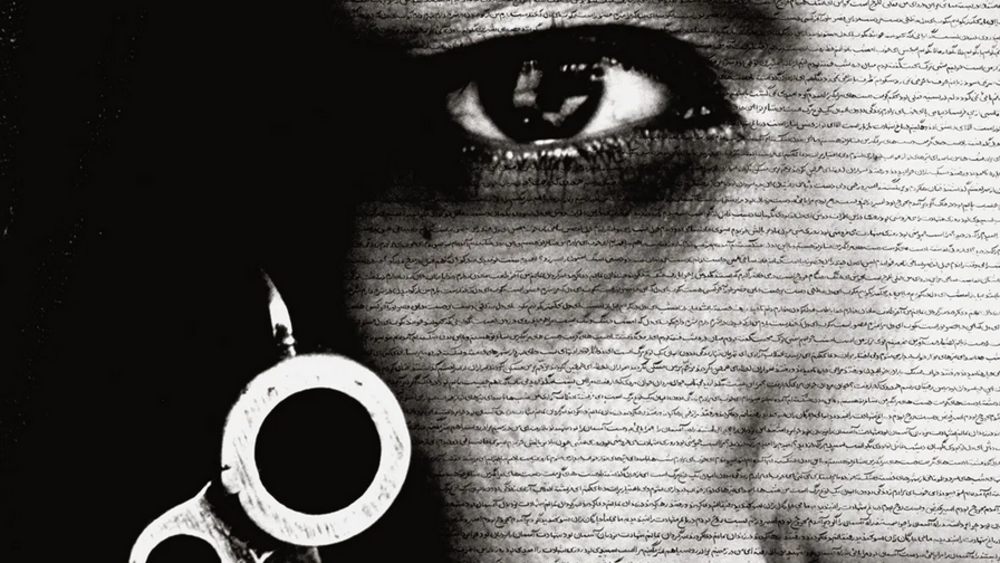
Shirin Neshat, Speechless, 1996, Ausschnitt